Luxury Furniture Trends: Why Luxury Furniture Is Becoming Human Again
- Jun 3
- 7 min read
Among the most significant luxury furniture trends emerging today is a growing appreciation for craftsmanship, pattern, materiality and individuality.

There was a time when luxury interiors seemed to be getting quieter.
Not quieter in the sense of quality. Quite the opposite. Materials became more refined, detailing more precise and technology increasingly invisible. Yet somewhere along the way, many interiors began to feel strangely anonymous. Walls softened into shades of beige. Furniture became cleaner, flatter and more restrained. Decoration was edited away. Character often followed.
For the better part of two decades, minimalism has shaped the visual language of luxury. Inspired by modernist architecture, gallery spaces and a growing appetite for simplicity, interiors became exercises in reduction. The goal was to remove rather than add. To refine rather than embellish.
And yet, after spending time at Salone del Mobile in Milan this year, visiting exhibitions, speaking with designers and observing the pieces that consistently attracted the largest crowds, it became clear that something is shifting. The conversation is no longer centred around less.
It is centred around meaning.

SALONE DEL MOBILE 2026








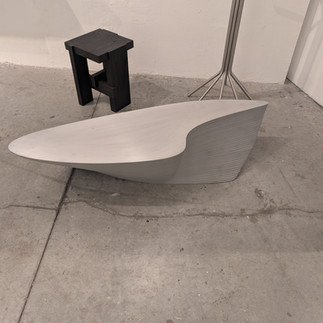
SOLIDIFIED - MILAN 2026
Luxury furniture trends - Across Milan, some of the most compelling furniture wasn’t necessarily the most technologically advanced or the most minimalist. Instead, people were drawn towards pieces with visible craftsmanship, unusual materials, intricate details and a clear sense of identity. Furniture that looked as though it had been made by human hands rather than generated by an algorithm. Furniture with stories to tell. Furniture that rewarded a second glance.
The future of luxury furniture, it seems, is becoming more human.

What ALCOVA Revealed About the Future of Design
If the halls of Salone del Mobile reveal what the industry is selling today, Alcova often reveals what it will be talking about tomorrow.
For many visitors, Alcova has become the most anticipated destination during Milan Design Week. Founded as an alternative platform for independent designers, researchers and experimental studios, it has evolved into a testing ground for ideas that sit outside conventional commercial design. This year, more than 130 exhibitors occupied a series of extraordinary locations across Milan, including the abandoned buildings of the Baggio Military Hospital and Villa Pestarini, one of the only private villas ever designed by Franco Albini.
What makes Alcova so fascinating is that trends appear there before they become trends.
Walking through the exhibition this year, one theme emerged repeatedly: designers are pushing back against uniformity.
There was an overwhelming focus on material experimentation, handcrafted processes, irregularity and tactile surfaces. Rope, woven textiles, stone, timber, ceramics and metal appeared everywhere. Pieces often felt unfinished in the best possible way, celebrating process rather than hiding it. Many designers seemed less interested in perfection and more interested in evidence of making.
Pattern also played a significant role.
Not in the traditional sense of decorative repeats applied to surfaces, but as a structural element. Weaving appeared in furniture, lighting and installations. Textiles were used to create architecture. Surfaces became layered, dimensional and deeply tactile. Pattern was no longer simply something to look at. It became something to experience.
Perhaps most interestingly, Alcova reinforced the growing relationship between craftsmanship and technology. Rather than replacing traditional making, digital tools were often used to enhance it. Hand-finished ceramics sat alongside AI-assisted design processes. Traditional weaving techniques were paired with contemporary materials. Throughout the exhibition there was a sense that the future of design will not be defined by technology alone, but by how technology can support craftsmanship without replacing the human hand.
This feels particularly significant at a moment when artificial intelligence is transforming almost every creative industry. The more technology advances, the more valuable genuinely handmade work appears to become.
Perhaps that is why Alcova felt so compelling.
It wasn't showcasing a nostalgic return to the past.
It was presenting a future where craftsmanship, materiality, pattern and human creativity become even more important.
And if Alcova is any indication of where the industry is heading, luxury furniture is likely to become richer, more expressive and more individual in the years ahead.



The End of Anonymous Luxury
Walk through almost any luxury hotel completed between 2015 and 2020 and you will likely notice a familiar palette.
Soft greys.
Muted taupes.
Pale oak.
Black steel.
Everything beautifully executed, but often difficult to distinguish from one project to the next.
Minimalism brought many positive things. It taught us restraint. It taught us the value of negative space. It reminded us that good design does not need excessive ornament.
But perhaps the greatest weakness of minimalism is that when applied too rigidly, it can become detached from the people living within it.
A home should reveal something about its owner. A hotel should reveal something about its location. A piece of furniture should reveal something about the person who designed it and the craftsman who made it.
Increasingly, designers and clients appear to be rediscovering this idea.
Recent trends emerging from Milan point towards richer materiality, sculptural forms, handcrafted surfaces and interiors that feel collected rather than curated. The emphasis is moving away from perfection and towards personality.
The question is no longer:
“What does this look like?”
It is becoming:
“Why does this exist?”

Material Has Become the Message
One of the defining themes of Salone del Mobile 2026 was materiality.
Not simply the use of beautiful materials, but an exploration of where those materials come from, how they are transformed and what they communicate. The official theme of this year’s exhibition, “A Matter of Salone”, placed material at the centre of the conversation. Wood, metal, stone, textiles and ceramics were not treated as finishes applied to an object. They became the starting point of the design itself.
This matters because materials carry memory.
A slab of marble tells a geological story millions of years in the making.
A piece of figured timber reveals decades of growth through every grain line.
Handwoven silk carries evidence of the people who created it.
Even the imperfections become part of the narrative.
Luxury is increasingly defined not by rarity alone, but by authenticity.
People want to understand what they are buying. They want to know where it came from. They want to know who made it.
The material itself becomes part of the experience.


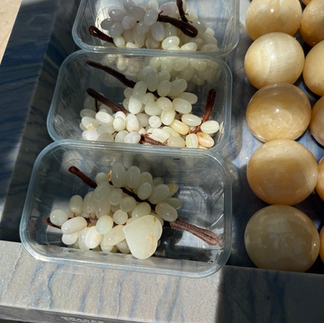


SOLID NATURE MILAN 2026
The Return of Pattern
For years, pattern was treated with suspicion.
Minimalism favoured plain surfaces. Large uninterrupted expanses. Quiet repetition.
Pattern was often dismissed as decorative.
Yet some of the most exciting interiors emerging today are embracing pattern once again, not as ornament but as identity. Perhaps this shouldn’t be surprising. Humans are naturally drawn to pattern. We see it in nature. In leaves. In animal markings. In geological formations. In the rhythm of architecture. Pattern provides familiarity and complexity at the same time. What is changing is the way pattern is being used.
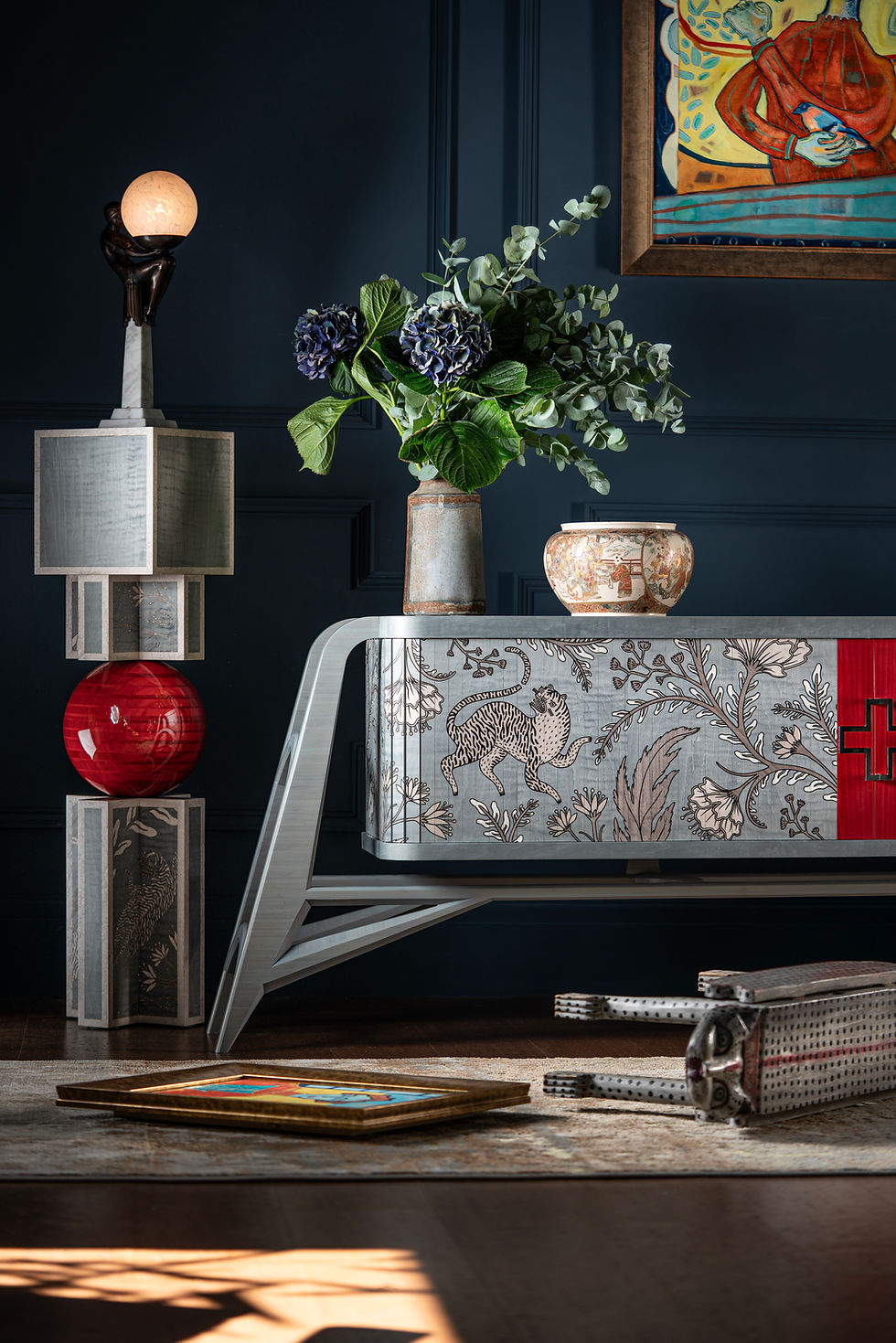
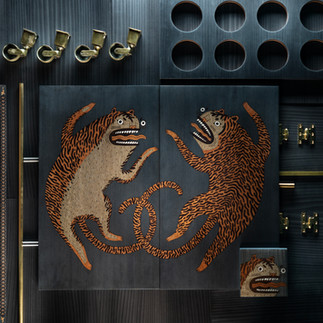
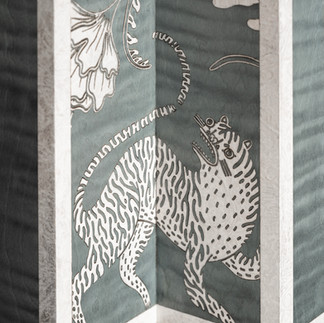
Rather than covering every surface, designers are deploying it strategically. A single upholstered chair. A silk wall covering. A marquetry cabinet door. A statement textile.
The result feels less like decoration and more like storytelling. Pattern has become a way of introducing emotion into increasingly sophisticated interiors. In many ways, it is a response to years of visual restraint. After all, if luxury is becoming more personal, then our interiors must also become more expressive. And pattern remains one of the most powerful tools we have for expressing personality.

TABU x PATIENCE & GOUGH - SALONE DEL MOBILE 2026

ARTEMEST APPARTMENTO - MILAN
Furniture as Art
Perhaps the most significant shift of all is the growing overlap between furniture and collectible design. Historically, furniture occupied a straightforward role. It served a function.
A chair was a chair.
A cabinet was a cabinet.
A table was a table.
Today, those boundaries are becoming increasingly blurred.

One of the major developments at Salone 2026 was the introduction of Salone Raritas, a dedicated platform celebrating collectible design, limited editions and exceptional craftsmanship. The inclusion of such a platform within the world’s most influential furniture exhibition signals something important. Collectible design is no longer a niche conversation happening on the fringes of the industry. It is moving towards the centre.

RARITAS - SALONE DEL MOBILE 2026
People are beginning to buy furniture in the same way they buy art. Not because they need it. Because they connect with it. Because it represents a point of view. Because it evokes an emotional response.
The most memorable furniture pieces today often have a sculptural quality. They command attention even when not being used. They become focal points within a room. In a world increasingly dominated by digital experiences, physical objects have acquired new significance.
The pieces we choose to surround ourselves with matter more than ever.

RARITAS - SALONE DEL MOBILE 2026








The Luxury of Time
Perhaps the most valuable commodity in contemporary furniture is not material.
It is time.
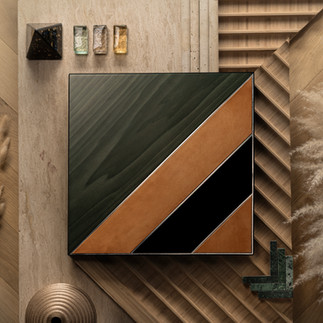
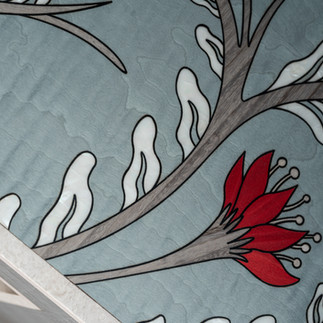
A hand-cut marquetry panel requires time. A hand-finished metal overlay requires time. A woven textile requires time. Time is visible in craftsmanship. And because time cannot be mass-produced, it has become one of the clearest indicators of luxury. This may explain why handmade furniture continues to resonate so strongly with clients.
People instinctively recognise the difference.
Not always consciously. But emotionally.
A handmade piece possesses a depth and richness that is difficult to replicate through industrial processes alone.
You can often feel it before you understand it.

Sustainability Beyond Recycling
For many years sustainability conversations focused almost exclusively on materials. Recycled content. Renewable resources. Carbon footprints.
These remain important considerations.
But the conversation is evolving. Increasingly, true sustainability is being linked to longevity. To durability. To objects designed to remain relevant for generations rather than seasons. (The Spruce)
A cabinet that lasts one hundred years is sustainable.
A chair that can be repaired rather than replaced is sustainable.
Furniture that becomes more beautiful with age is sustainable.
The most responsible object is often the one that never enters landfill.
This shift towards longevity aligns naturally with the growing appreciation for craftsmanship. Pieces made carefully tend to be valued more highly. They are maintained rather than discarded.
They acquire patina. They gather stories. They become part of a family’s history.






The Future Feels More Human
Looking ahead, the future of luxury furniture appears unlikely to be defined by a single aesthetic.
It will not be characterised by one colour, one material or one trend. Instead, the common thread appears to be authenticity. We are witnessing a growing appreciation for craftsmanship.
For pattern.
For materiality.
For individuality.
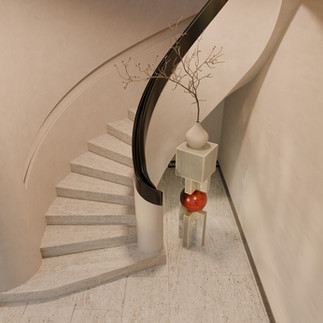
For objects that reveal the hands that made them. For interiors that feel personal rather than prescribed. The most exciting spaces today are not the most minimal. Nor are they the most extravagant. They are the most meaningful. Because ultimately, luxury has never been about having less or more. It has always been about having something worth caring about.
And after years of reduction, the design world appears ready to embrace that idea once again.


Comments