Silk Jacquard vs Printed Fabric: How to Choose
In a woven jacquard, the pattern is formed by the threads that make up the cloth. With a printed fabric, the design is applied through a printing process. Silk describes the fibre; jacquard describes how the pattern is constructed. A fabric can be both silk and printed, so those words alone do not tell you everything about it.
For a room, the useful question is how you want the pattern to feel. Do you want to follow the lines of an illustration, notice the changing surface of a weave, or enjoy both in different parts of the scheme? Look at the cloth as well as the drawing.
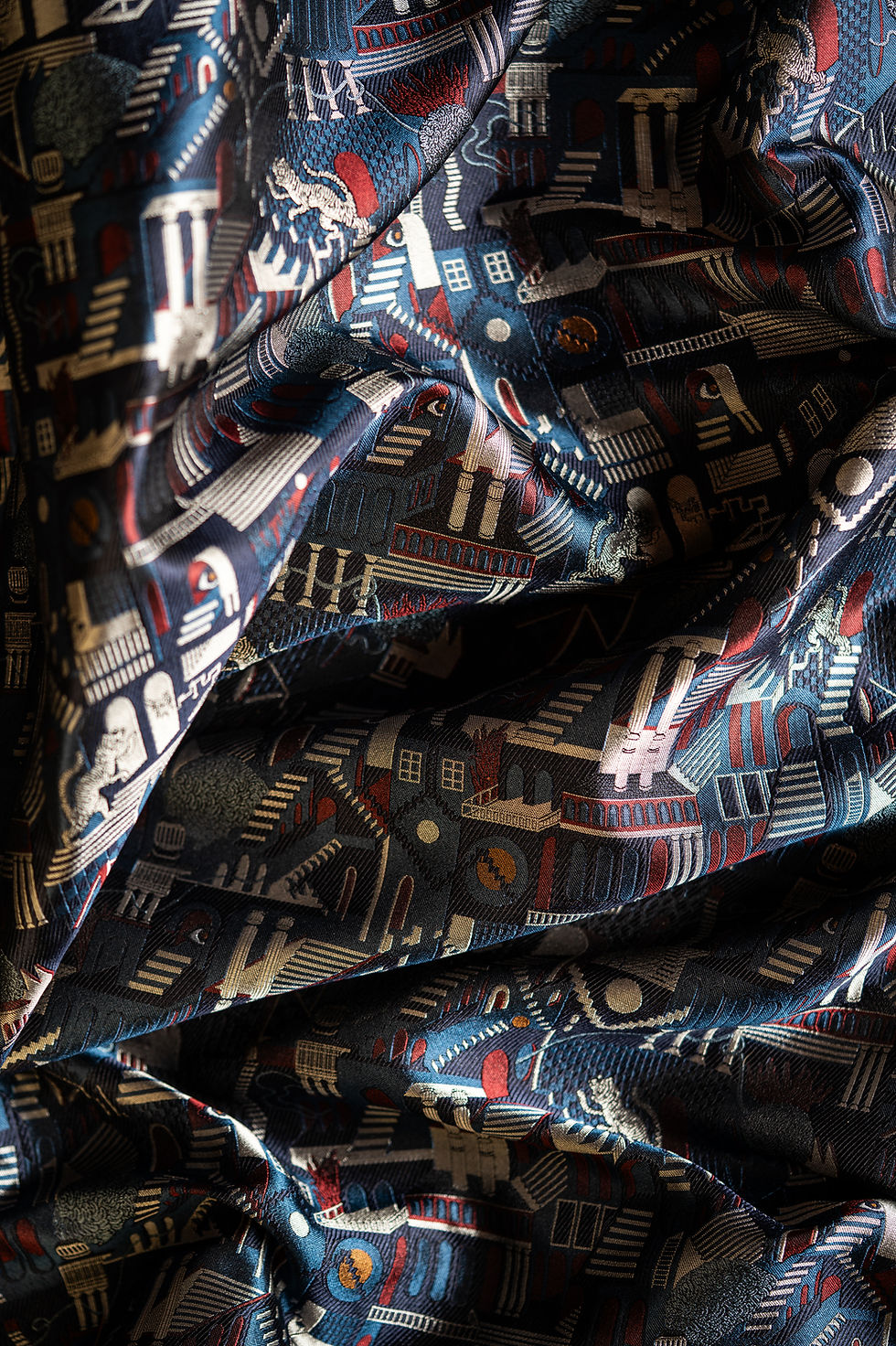
What changes when a pattern is woven?
With jacquard, the design has to work through the arrangement of yarns. The drawing and the construction of the cloth become part of the same decision. The RegioGreenTex textile glossary, hosted by EURATEX, describes jacquard pattern as incorporated into the weave.
In our Penrose Prowl Bauhaus silk, architectural shapes and animal motifs sit within a woven surface. Fold the sample, turn it towards the window, then lay it flat again. The parts that catch your eye may change. That is worth seeing before you decide how the fabric will sit on a chair or across a larger panel.
Printing offers a different way to carry the artwork. The character of the base cloth still matters: a drawing on velvet does not have the same presence as a drawing on linen. Neither the word “printed” nor the word “jacquard” is a quality grade on its own.
Is all jacquard made from silk?
No. Jacquard is a method of creating a patterned textile, not a fibre name. Check the composition separately. Our bespoke pure silk jacquard service translates our patterns into a weave with 154 picks per centimetre and up to eight colours. Those are details of our offering, rather than a specification that applies to every jacquard.
The numbers are useful when discussing the cloth, but a sample tells you something they cannot: whether you enjoy its surface in your room. Compare it beside the timber, wall colour and other textiles it will actually meet.
Which should you choose for upholstery?
Begin with the piece and its use. A dining chair, a headboard and a sofa used every evening ask different things of a fabric. Ask for the specification for the exact cloth you are considering, and discuss its suitability with your upholsterer before ordering.
A woven pattern is not, by itself, a promise of better wear. Fibre, construction and finish all need to be considered. Request the available performance information and care instructions rather than deciding from a photograph or assuming that all silks behave alike.
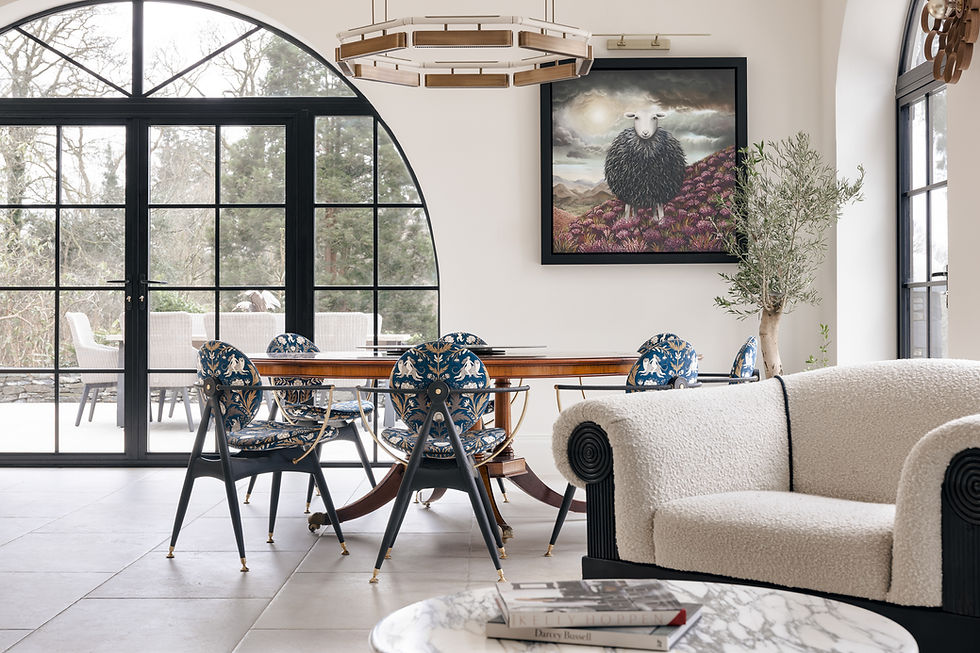
Then look at pattern placement. Where will the main motif fall? Will a seam pass through it? Will the design still read clearly on the narrow back of a chair? Our Bay View bedroom case study shows how changing scale can give a pattern different roles within one room.
Can you mix jacquard and printed textiles?
Yes. Try giving each a distinct job. A patterned chair might carry the clearest motif, with a smaller repeat at the window or on a cushion. Pull one or two colours through the scheme, then allow the surfaces to differ.
Lay the samples together and stand back. If they seem to compete, change the scale or contrast before abandoning one of the designs. Our guide to using patterned textiles in interiors explores this in more detail.
A practical sample comparison
View both fabrics in the room during daylight and under the lamps you use in the evening.
Hold each sample in the direction it will be fitted. A vertical chair back and a horizontal seat receive light differently.
Ask to see the full pattern repeat. A small swatch may not show the whole drawing.
Mark out seams, edges and the main motif with your maker before agreeing the cutting plan.
Confirm composition, intended use, care, available quantity and lead time for the chosen cloth.
Explore the cloth, then discuss the project
See the Penrose Prowl Bauhaus silk jacquard sample for photographs of the weave and current sample availability. If it is unavailable, use the enquiry form on that page to discuss sampling and your intended use.
You can also explore our upholstery fabrics and bespoke textile service. Tell us which pattern you are drawn to, what you want to cover and the colours already in the room. That gives the conversation somewhere useful to begin.
Comments